
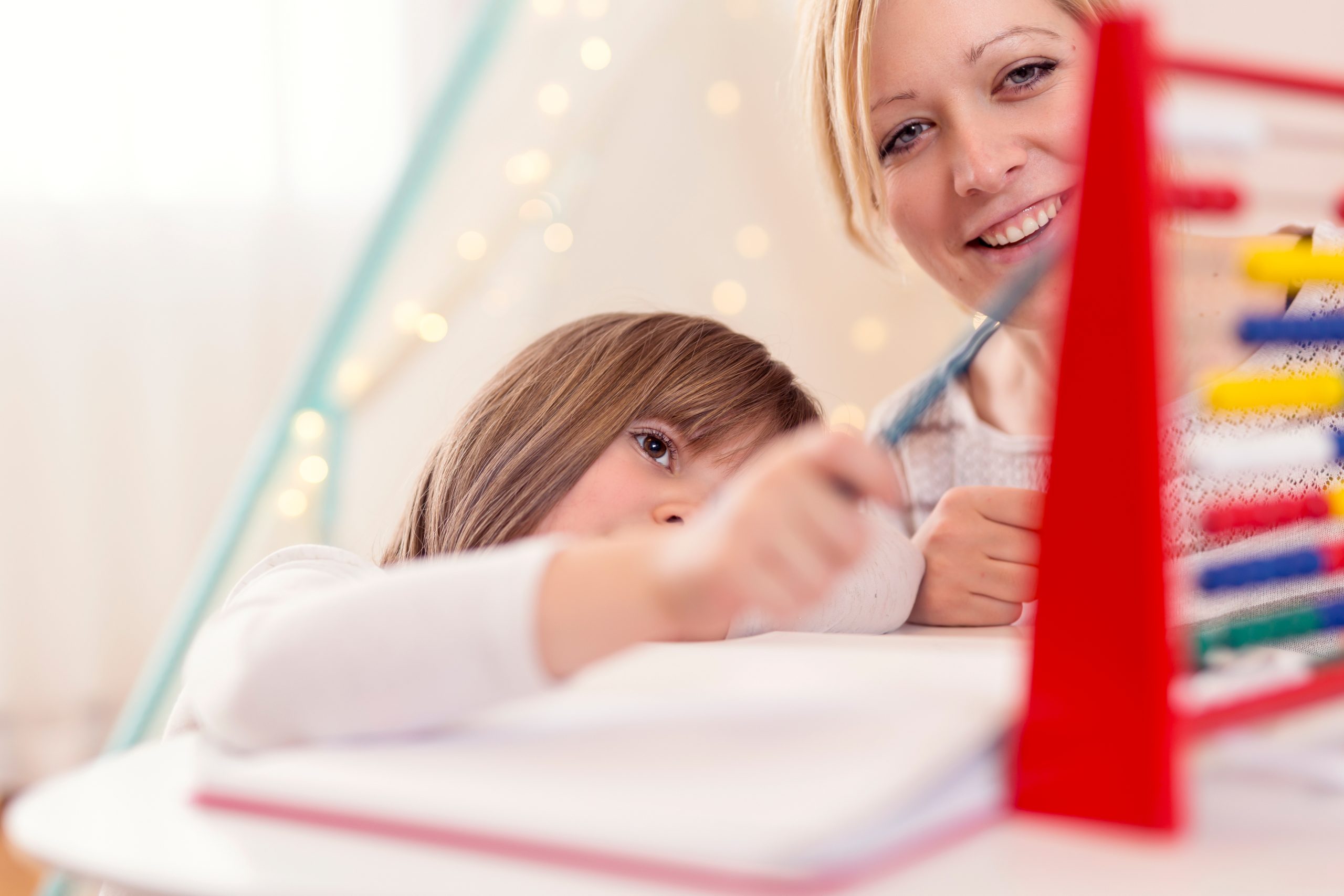
Mathematics is not just a school subject — it is a life skill that begins developing long before your child enters a classroom. The foundation of mathematical ability is built through everyday experiences: sorting toys, counting steps, comparing sizes, and measuring ingredients. Parents who intentionally weave mathematical thinking into daily life give their children a significant advantage. Here is how to improve your child's maths skills through simple, practical activities.
How to Improve Your Child's Maths Skills
Mathematical ability is not a talent some children are born with and others are not. It is a skill built through experience, practice, and the right kind of exposure. The following strategies turn everyday moments into mathematical learning opportunities without adding pressure or extra homework.
Introduce the Concept of Size
Understanding size, measurement, and comparison is one of the earliest mathematical skills children develop. Even before they can count, young children can grasp concepts like bigger, smaller, taller, shorter, heavier, and lighter.
Use everyday opportunities to introduce these concepts: "Which glass has more water?" "Is this box heavier or lighter than that one?" "Who is taller — you or your brother?" Let your child arrange objects from smallest to largest or sort items by weight.
For older children, connect size concepts to formal measurement. Let them measure ingredients for cooking, estimate distances, or compare product sizes at the shop. This builds the spatial reasoning and estimation skills that underpin geometry and measurement in the CAPS curriculum.
Discuss Numbers in Daily Life
Numbers are everywhere, and pointing them out helps children see maths as a natural part of life rather than an abstract school subject. Count steps as you climb them. Read house numbers on your street. Point out prices at the shop and discuss what things cost.
For younger children, practise counting objects: "How many apples did we buy? How many plates do we need to set for dinner?" For older children, discuss percentages, ratios, and statistics: "If this jersey is 30 percent off, how much will you actually pay?" "The cricket team's run rate is 5.2 — what does that mean?"
The goal is to make number talk a normal part of family conversation so that your child develops an intuitive comfort with numbers.
Assign Jobs That Involve Maths
Household tasks are full of mathematical opportunities. Let your child take charge of tasks that require calculation, planning, and problem-solving.
Setting the table requires one-to-one correspondence: one plate per person, one fork per place setting. Managing a pocket money budget teaches addition, subtraction, and percentages. Planning a birthday party involves multiplication: if each guest gets three party favours, how many do we need for eight guests?
For teenagers, involve them in household budgeting conversations, comparing electricity tariffs, calculating data costs, or planning grocery shopping within a budget. These real-world applications make abstract mathematical concepts concrete and meaningful.
Put Things into Categories
Sorting and classifying are fundamental mathematical skills that develop logical thinking. Young children can sort toys by colour, shape, or size. They can organise books by height, group animals into categories, or sort laundry by type.
For older children, classification extends to data handling and analysis. Create simple surveys at home: "What is everyone's favourite fruit? Let us make a chart." Discuss how information is organised in tables, graphs, and databases. These skills connect directly to the data handling and statistics components of the CAPS maths curriculum.
Use Cooking as a Maths Lesson
Cooking is one of the richest mathematical activities available at home. It involves measurement, fractions, ratios, timing, temperature, and estimation — all in a practical, enjoyable context.
Let your child measure ingredients using measuring cups and spoons. Ask them to halve or double a recipe, which naturally introduces fractions and multiplication. Discuss temperature settings and cooking times. For older children, calculate nutritional values, scale recipes for different numbers of servings, or convert between metric and imperial measurements.
The best part of cooking as a maths activity is that you get to eat the results. The association between maths and something enjoyable helps build a positive attitude toward the subject.
Teach and Explore Shapes
Geometry begins with recognising shapes in the world around us. Point out shapes everywhere: circular wheels, rectangular doors, triangular road signs, cylindrical cans. Let young children trace shapes, build with blocks, and create patterns with coloured shapes.
For older children, explore shapes more deeply. Discuss symmetry, angles, and three-dimensional objects. Build structures with cardboard and measure angles with a protractor. Use online tools or platforms like iRainbow to explore geometric concepts visually and interactively.
Understanding shapes and spatial relationships is essential for success in geometry, which forms a significant part of both CAPS and IEB mathematics at every level from Foundation Phase through to matric.
Help Your Child Succeed
iRainbow provides 15,000+ video lessons, gamified activities, and a free AI Tutor — all aligned with CAPS and IEB curricula. One subscription covers all your children.